

Puppy advice: raising, training and caring for your puppy
Worming Puppies: When to Start, How Often and What to Ask the Breeder
Why puppies get worms, the usual UK puppy worming schedule by age, signs of worms, lungworm, and the worming records to ask the breeder for when you collect your puppy.
What this guide covers
Most puppies are born carrying roundworm or pick it up from their mother's milk, so worming starts in the litter, long before a puppy goes home. UK vet and charity guidance usually starts treatment at two to three weeks old, repeats it every two weeks or so until somewhere between 12 and 16 weeks, then moves to a monthly or less frequent routine. Your vet's plan for your puppy is the one to follow, and the breeder should hand you a written record of every treatment so far.
Why do puppies get worms?
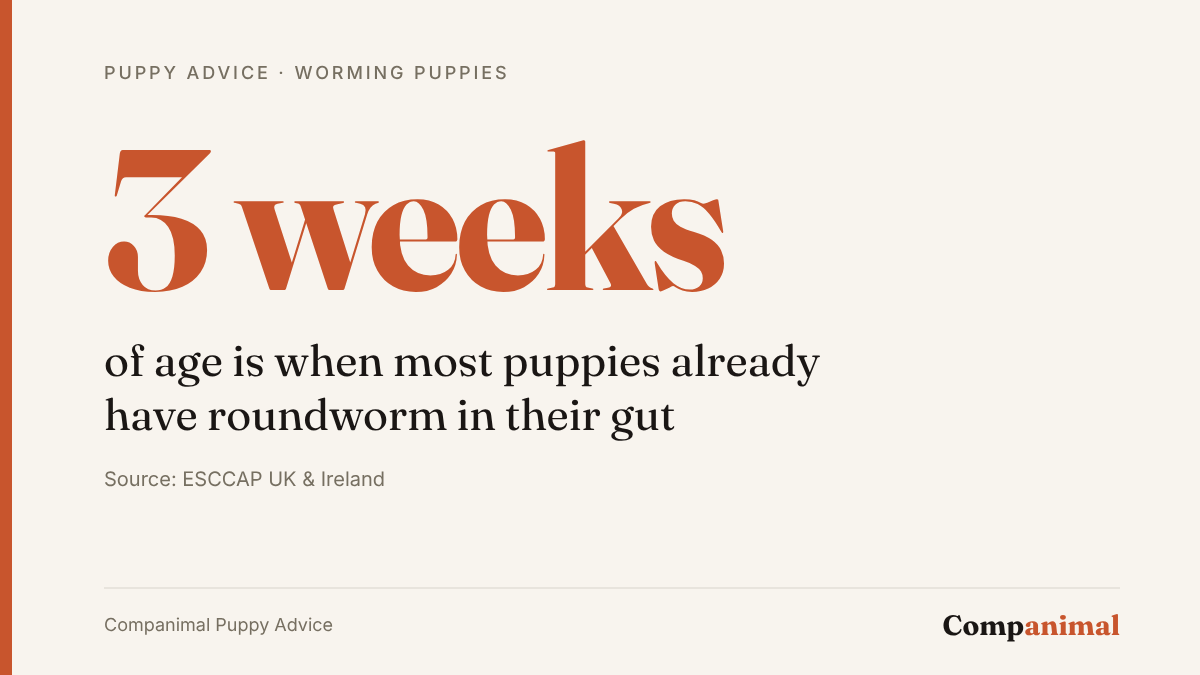
Puppies get worms mainly from their mum. Many puppies are born with roundworm, caught in the womb or through their mother's milk. ESCCAP UK & Ireland, the UK and Irish branch of the European Scientific Counsel Companion Animal Parasites, says the vast majority of puppies carry roundworm at birth and have worms in their small intestine by three weeks of age. Hookworm can pass through the milk too. Infected puppies can pass worm eggs in their poo from about two to three weeks old.
That is why regular worming matters for every puppy, whether or not the mother was wormed.
As puppies grow, they pick up worms in other ways:
- Eating soil, poo, raw meat or animal carcasses, or licking contaminated objects (roundworm)
- Swallowing fleas while grooming (tapeworm), or eating raw meat, rats and mice
- Swallowing worm eggs or larvae from soil while grooming, or picking up hookworm larvae through the skin
- Eating slugs and snails, which carry lungworm
The worms that matter for UK puppies
Blue Cross lists roundworms, hookworms, whipworms and tapeworms as the main intestinal worms in dogs, and lungworm is a separate threat.
| Worm | How puppies catch it | Why it matters |
|---|---|---|
| Roundworm (Toxocara canis) | From mum in the womb or milk; soil, poo, raw meat | Can cause dehydration, gut blockages and death in puppies |
| Tapeworm | Swallowing infected fleas; raw meat, prey | Can be more serious in puppies than adults; segments look like grains of rice |
| Hookworm | Mum's milk, contaminated soil | Can be fatal in young puppies |
| Lungworm (Angiostrongylus vasorum) | Eating infected slugs and snails | Potentially fatal and a growing problem in the UK |
| Whipworms and threadworms | Not a common UK risk | Relatively rare in the UK |
Puppy worming schedule: how often to worm a puppy
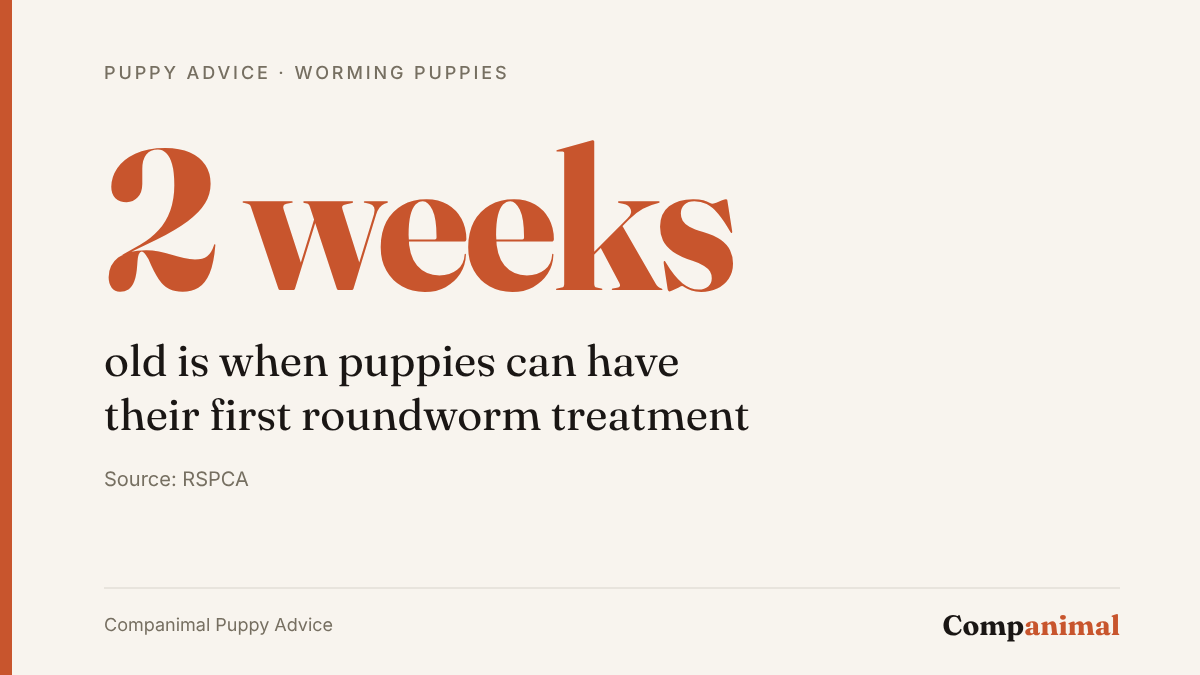
The usual puppy worming schedule starts at two to three weeks old, repeats roughly every two weeks, and carries on until somewhere between 12 and 16 weeks of age, with many puppies then wormed monthly until six months of age. The organisations below agree on the shape of the schedule but differ slightly on the details, so treat this as the range and follow your vet's plan for the exact dates. Worming runs alongside the UK vaccination schedule, so your puppy's first vet appointments are the natural time to set both.
| Source | First treatment | How often | Until |
|---|---|---|---|
| ESCCAP | 14 days old | Every 2 weeks | 2 weeks after weaning; monthly up to 6 months if infection risk stays high |
| RSPCA | From 2 weeks old | Usually every 2 weeks | Not stated |
| Blue Cross | Not stated | Every 2 weeks | About 12 to 14 weeks old; regular worming often until 6 months |
| PDSA | Around 3 weeks old | Every 2 to 3 weeks | 16 weeks old |
| Beaumont Sainsbury Animal Hospital (RVC) | Not stated | Monthly | 6 months old, then a long-term plan from your vet |
Stage by stage, from newborn puppy to adult dog
| Age | What usually happens | Who is responsible |
|---|---|---|
| 2 to 3 weeks | First roundworm treatment | The breeder, with their vet |
| Up to leaving mum | Repeat about every 2 weeks (PDSA says every 2 to 3) | The breeder |
| Home to 12 to 16 weeks | Keep going on the fortnightly routine your vet sets | You and your vet |
| Up to 6 months | Regular worming continues, often monthly, and monthly if infection risk stays high | You and your vet |
| Adult dogs | Every 1 to 3 months for most dogs, or at least four times a year, so at least every three months; dogs that scavenge or hunt need more frequent treatment | You and your vet |
When to worm a puppy also depends on the product. Each wormer has its own frequency guidelines, and it must suit your puppy's age and weight. Worming (sometimes called deworming) removes the adult worms present at the time of treatment, but puppies can be reinfected, which is why you need to worm on a regular routine rather than once. ESCCAP UK & Ireland says each pet's plan will differ and should be agreed with your vet. How often to worm your dog as an adult depends on your dog's lifestyle: ESCCAP's scheme ranges from once or twice a year for low-risk dogs to monthly for higher-risk dogs, such as those living with small children.
Signs of worms in puppies
Worms in puppies often cause no obvious signs at all. Most dogs show few or no symptoms, adult worms are rarely seen, and a vet usually needs to check a poo sample under a microscope to confirm an infection. Even a puppy that looks healthy may have worms. Signs to watch for include:
- A pot belly or bloated tummy, especially in puppies
- Poor growth or weight loss
- Vomiting or diarrhoea
- Worms in the poo, or rice-like tapeworm segments around the bottom
- Scooting, or licking the bottom more than usual
- An increased appetite, weakness or lethargy
- Coughing, which mainly happens with roundworm and hookworm
- Blackish blood in the poo, which can be a sign of hookworm
Left untreated, a heavy worm infestation in a puppy can block the intestine, which can be life-threatening. Loose stools have many causes, so our guide to puppy diarrhoea explains what else to consider and when it is urgent.
If you spot worms, the RSPCA suggests wrapping them in damp cotton wool, keeping your hands clean, so your vet can identify them. A poo sample or a photo also helps.
Lungworm in puppies
Lungworm is different from intestinal worms: it can cause serious health problems or death, and many common wormers do not treat it. Dogs catch it by eating infected slugs and snails, often by accident while eating grass or drinking outdoors. Puppies that eat slugs or snails are especially at risk, as are dogs that chew grass, toys or sticks. After about five weeks, adult lungworms develop in the arteries leading to the heart.
Signs of lungworm are often vague, but can include:
- Coughing
- Fast or noisy breathing
- Weight loss
- Unexplained bruising or bleeding
- Seizures, collapse or blindness
Contact a vet immediately if you see these signs. No lungworm treatment is available without a prescription, so ask your vet whether your puppy's worming plan covers it.
How the breeder should have wormed the litter
A responsible breeder starts worming with the mother. ESCCAP recommends treating the mother at the same time as the puppies' first treatment, about two weeks after the birth. Blue Cross advises worming breeding females when pregnant and while feeding puppies, and the RSPCA says pregnant dogs should only be wormed under a vet's direction. The puppies should then be wormed from about two weeks old, every two weeks.
The RSPCA and AWF puppy information pack asks breeders to record the product used and the date of every worming treatment the puppy has had, plus when the mother was last wormed and with which product. It also advises against buying from a breeder who has not treated their dogs for worms at all.
Worming paperwork to ask for at collection
Dogs Trust advises finding out a puppy's health, worming and vaccination status before you visit, and checking the paperwork will be ready when you collect. Ask the breeder or rescue for:
- The name of every wormer given and the date of each dose
- When the mother was last wormed, and with what
- Any flea treatment given, with product and date
- Vaccination and vet records
- Microchipping documentation
- When the next worming treatment is due
Puppies need regular worming after they leave the breeder too, so the record is what lets your vet carry on without gaps or double doses. Our guide to picking up your puppy covers the rest of collection day, and the new puppy checklist helps you have everything ready. Dogs Trust also recommends a vet health check within 48 hours of bringing your puppy home; take the worming record with you.
Why use a vet-recommended wormer?
Regular, effective worming helps protect your puppy and your family, and the PDSA advises worming regularly with an effective product. It ranks the options like this:
| Type of wormer | Where it comes from | How reliable |
|---|---|---|
| Prescription | Your vet, or an online pharmacy with a prescription | Most reliable |
| NFA-VPS | A qualified person, such as a pharmacist, or online after a form is checked | Less reliable than prescription, more than off the shelf |
| Off-the-shelf dog wormer | Shops and supermarkets | Least reliable, not recommended |
| Home remedies | Very unlikely to work, should not be used |
Your vet can recommend products to treat and prevent worms, and will pick one that covers the right worms for your puppy's age, lifestyle and where you live in the UK. Wormers come as tablets, spot-ons and injections, and some cover several parasites at once. A single vet tablet can treat both tapeworm and roundworm. If you do buy a dog worming product from a shop, Blue Cross says to check the label for the right dose for your dog's weight and which worms it treats. Because fleas spread tapeworm, good puppy flea treatment is part of worm control too.
A single treatment often does not clear every worm, which is why repeat treatments are needed. If your puppy is sick after worming tablets, ask your vet whether to give another dose.
Worms and your family
Some worms can pass from dogs to people. Dog roundworm can cause toxocariasis. The risk is very small, but it mainly affects children, and in rare cases the larvae can damage the eye. Roundworm eggs take about three weeks to become infectious to humans and can stay infectious in soil for up to two to three years.
Good hygiene cuts the risk:
- Pick up your puppy's poo straight away
- Wash your hands after handling puppies, after gardening and before eating
- Keep up your puppy's worming routine
When to see a vet
Contact your vet for advice if your puppy:
- Seems unwell, or has diarrhoea after a worming tablet
- Is sick after a worming tablet
- Has visible worms in their poo or around their bottom
- Is losing weight, not growing well or has a pot belly
- Has no worming record and you are not sure what they have had
Contact a vet immediately if your puppy:
- Has breathing problems, unexplained bleeding or bruising, seizures or collapses, which can be signs of lungworm
- Has a hugely swollen tummy, keeps vomiting or is very weak, as a heavy worm burden can block the gut
- Has vomiting and bloody diarrhoea, especially if not fully vaccinated, as this can also be a sign of parvo in puppies
Frequently asked questions
How often should I worm my puppy?
Most UK guidance says every two weeks or so from two to three weeks old until 12 to 16 weeks, then often monthly until six months. After that, most dogs are wormed every one to three months. Your vet's plan comes first.
Do puppies need worming if the mother was wormed?
Yes. Regular worming is important for all puppies, whether the mother was wormed or not.
Can you get rid of worms in a puppy without going to the vet?
You can give the treatment at home, but get the product through your vet. The PDSA says prescription wormers are the most reliable, off-the-shelf products are not recommended and home remedies are very unlikely to work.
What do worms look like in puppy poo?
Tapeworm segments look like grains of rice and are often seen around the bottom. Many infections cause no visible worms, so a vet may need to test a poo sample.
Can I catch worms from my puppy?
It is rare, but dog roundworm can infect people, especially young children. Picking up poo promptly and washing hands after handling your puppy reduce the risk.
Can I worm my puppy before their vaccinations?
Yes. Worming usually starts at two to three weeks old, so most puppies have had several treatments before their first vaccination. Your vet can plan both together.
Do indoor puppies need worming?
Yes. Most puppies pick up roundworm from their mother before or soon after birth, so every puppy needs worming wherever it lives.
What are the side effects of worming tablets?
Some puppies can be sick or have an upset tummy after a tablet. Contact your vet if your puppy seems unwell or has diarrhoea afterwards, or is sick after a dose.
Is it safe to worm a pregnant dog?
Only under a vet's direction, according to the RSPCA. Blue Cross advises worming breeding females when pregnant and while feeding puppies.
Can a poo test replace routine worming?
For adult dogs, ESCCAP's scheme gives testing poo samples and treating based on the results as an alternative to routine worming. Puppies still need their routine treatments, so ask your vet.
Do all wormers cover lungworm?
No. Many common wormers do not treat lungworm, and lungworm treatment needs a prescription. Ask your vet.
Ready to look?
Looking for your next dog?
Browse sellers who show their working. Every listing tells you what has been disclosed, and what has not.
How Companimal shows you what a seller has disclosed
Account in good standing with a phone number confirmed by the seller.
A council licence number disclosed, or KC registration declared on the listing.
A credentialled breeder whose council licence we have checked against the register.
Information on a listing is self-declared by the seller and has not been independently checked. Read our methodology
More from this series
Calm, practical reads from the same hub.
Puppy advice: raising, training and caring for your puppy · 12 min read
Puppy Vaccinations: The UK Schedule, Boosters and When Your Puppy Can Go Out
A plain-English guide to puppy vaccinations in the UK: when the first and second jabs happen, what they protect against, boosters, costs and when your puppy can safely go out.

Puppy advice: raising, training and caring for your puppy · 16 min read
Best Dog Insurance UK 2026: 8 Pet Insurance Providers Compared
Petplan, ManyPets, Animal Friends, Agria, Perfect Pet, NowPet, Waggel and Purely Pets compared on vet fee limits, excess, age limits and what they leave out.
Puppy advice: raising, training and caring for your puppy · 10 min read
Puppy Flea Treatment: When to Start, What to Use and How Often
How to spot fleas on a puppy, when puppies can have flea treatment, the main types of treatment, how often to use it, and how to clear fleas from your home safely.