

Puppy advice: raising, training and caring for your puppy
Puppy Contract: What It Covers, What to Sign and the Red Flags
A puppy contract records a puppy's health and history and what buyer and breeder agree. Here is what the free Puppy Contract covers, what to check before you sign and what breeders should hand over.
What this guide covers
A puppy contract is a written agreement between the person selling a puppy and the person buying it, recording the puppy's health, history and what each side has promised. In the UK the best known is the free Puppy Contract developed by the RSPCA and the Animal Welfare Foundation, which pairs a puppy information pack filled in by the breeder with a contract of sale. Citizens Advice says a puppy contract is legally binding, so it gives buyers better protection than a handshake and a cash payment.
What is a puppy contract?
A puppy contract turns a verbal promise into a written record. Citizens Advice explains that the seller must give a detailed description of the puppy's health and history in the contract, and that because it is legally binding it gives you better protection as a consumer.
For buyers, the facts you were told on the visit are written down. For breeders, it shows the care that went into a litter. It is the last step in breeding and selling responsibly, after the puppies are old enough, chipped and ready to go.
This guide explains what a contract normally contains. It is general information, not legal advice. If you have a dispute or want specific clauses written, speak to Citizens Advice or a solicitor.
The Puppy Contract from the RSPCA and the Animal Welfare Foundation
The Puppy Contract is a free, downloadable toolkit developed by the Animal Welfare Foundation (AWF) and the RSPCA to help puppy buyers find a healthy, happy puppy. It is supported by the BVA, Dogs Trust, PDSA, the Universities Federation for Animal Welfare and the Dog Breeding Reform Group. The BVA describes it as developed by welfare professionals and vets, and free to download.
It has two parts:
| Part | Who fills it in | What it does |
|---|---|---|
| Puppy information pack | The breeder | Records details about the puppy and its parents, so the buyer can read them before deciding |
| Contract of sale | Breeder and buyer | Described by its makers as a legally binding contract for sale between the buyer and the breeder |
The toolkit also includes a ten-step guide for buyers, from costs and questions to ask breeders to spotting puppy dealers. The BVA's advice to buyers is simple: always use the Puppy Contract. Dogs Trust's buying checklist also recommends it, particularly if the breeder is not part of an assured breeder scheme, and suggests agreeing in advance when the contract will be completed.
What the puppy information pack should tell you
The information pack is the breeder's side of the story, written down before you commit. Use it alongside the BVA's recommended questions for breeders. A complete set of answers should cover:
| Topic | What you should be able to find out |
|---|---|
| Who bred the puppy | Whether the person selling actually bred the litter |
| Where the puppies live | Where they are kept, and whether house training and socialisation have started |
| Parents' health | Whether both parents of this puppy were screened for inherited diseases that can be tested for in the breed, for example through the BVA/Kennel Club Canine Health Schemes, with a copy of the results you can show your vet |
| Microchip and vaccinations | Whether the puppy will be microchipped and have its first vaccinations before going home |
| Health history | Any health problems in the puppy or its parents |
| Routine treatments | Whether the puppies have been wormed or had other routine veterinary treatment |
How a puppy has been raised matters as much as the health records. If the information pack mentions a socialisation plan, ask how it works day to day, and read up on puppy socialisation so you know what good early experiences look like.
What a puppy sale contract usually includes
The contract of sale is the part both of you sign. Wording varies, but the Royal Kennel Club's contract of sale template gives a clear picture of the usual sections:
| Section | Typical content |
|---|---|
| Puppy details | Breed, date of birth, sex, colour, microchip number, plus registration details if the puppy is registered |
| The parties | Names, addresses and phone numbers of seller and buyer |
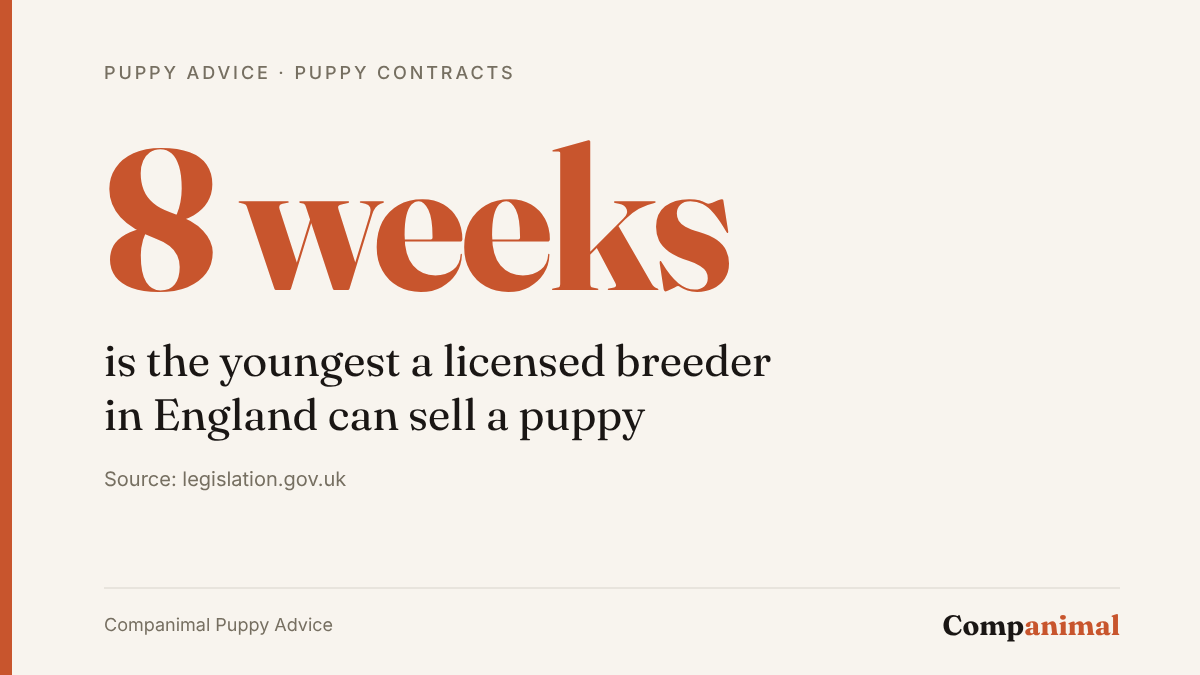
| Seller's promises | The puppy is the one you chose, it is in good health, it is over 8 weeks old, it has been socialised, and the parents' health screening has been done |
| Buyer's promises | You have read the health information, you can meet the puppy's needs, and you will contact the seller if you can no longer keep the dog |
| Veterinary check and health schedule | The date of the pre-sale vet check, the vet's details and any faults found |
| Endorsements | For registered puppies, any restrictions on registering future litters or on export pedigrees |
| Signatures | Date of sale, confirmation that the price has been received, both signatures, one copy each |
Two details in that template are worth knowing. It states that the contract does not affect the buyer's statutory rights, and it advises the buyer to have the puppy checked by their own vet within a week. Dogs Trust suggests booking that health check within 48 hours of collection, so sooner is better.
What the law already requires at the point of sale
A contract sits on top of the law; it does not replace it. In England, the conditions licensed dog breeders must meet include these:
- No puppy under 8 weeks old may be sold or permanently separated from its mother.
- A puppy may only be shown to a buyer when it is with its biological mother.
- The buyer must be told the age, sex and veterinary record of the puppy.
- Adverts must include the breeder's licence number.
- Puppies must be raised on a documented socialisation and habituation programme.
- The breeder must keep a record of puppy sales, including each puppy's microchip number, the date and its age when sold.
Every dog in the UK must be microchipped and registered on a database by 8 weeks old, and you can be fined up to £500 if a dog that should be chipped is not. Ask for proof that the chip was fitted, such as a microchip certificate or vet records, and make sure the details are updated to you after the sale. The breeder's side of that process is covered in our guide to microchipping puppies.
Since 6 April 2020, Lucy's Law has meant anyone getting a puppy in England must buy directly from the breeder or adopt from a rescue centre, and licensed breeders must show puppies interacting with their mothers where they were born. Puppies should never be sold under 8 weeks old, and our guide to when puppies can leave their mum explains how that rule works in each UK nation.
Your consumer rights when buying a puppy
Your rights depend on who you buy from. This is how Citizens Advice describes them for England:
| You bought from | What Citizens Advice says |
|---|---|
| A shop or business | Your rights are the same as for any other product. If the puppy becomes ill or dies shortly after you buy it, you may be able to get a refund or a replacement, and you can ask the seller to cover vet fees for treatment soon after the sale |
| A private seller | You have fewer rights. You can only get a refund if the puppy did not match the description the seller gave you. If you did not ask about its health and the seller did not tell you, there is nothing you can do |
That second row is why a written contract matters so much: a signed description of the puppy's health and history is something to compare the puppy against. Citizens Advice also suggests checking whether a business seller holds a pet-selling licence from the local council. Scotland, Wales and Northern Ireland have their own Citizens Advice guidance, so check the version for where you live.
Before you sign: a checklist for puppy buyers
Read everything before collection day, not with a puppy on your lap.
- Get the information pack and contract early, so you have time to read them and ask questions.
- Check the puppy details match what you saw: sex, colour, date of birth and microchip number.
- See the vaccination record. The BVA says it should be stamped by a veterinary practice and signed by a vet.
- Ask for the parents' health screening certificates and run the results past your vet.
- Confirm the worming and flea treatment history and what is due next.
- Read what the contract says if the puppy has a health problem, and whether it covers returning the puppy.
- Make sure you saw the puppy with its mother, ideally on more than one visit.
- Count the puppy's age from its date of birth. Under 8 weeks is a no.
- Keep your signed copy, the information pack and proof of payment together.
If the paperwork does not match what you were told, do not sign until it is explained.
For breeders: what to hand over with each puppy
A complete, honest pack protects you as well as your buyers. Part of selling your puppies safely is having this paperwork ready for every puppy before collection day:
- The puppy information pack, filled in truthfully, covering the puppy, its parents and its early experiences.
- The contract of sale, with two copies to sign so each of you keeps one.
- Vaccination and vet records, stamped and signed by your vet.
- Microchip paperwork, with the chip registered on a database before 8 weeks and a plan for transferring the details to the new keeper.
- Parents' health screening certificates for the tests relevant to your breed.
- Worming and routine treatment history, with dates and products used.
- Registration and pedigree papers, if the puppy is registered, plus a clear explanation of any endorsements.
- Your licence number, if you need a breeding licence, which must appear on your adverts in England.
Send the paperwork to puppy buyers before collection, not on the doorstep, so the new owner has time to read it and ask questions.
Puppy contract red flags
A contract only protects you if the seller is genuine. Be wary if:
- The seller did not breed the puppy. The BVA says to walk away regardless of any other answers.
- You cannot see the puppy with its mother where it was born.
- The puppy is under 8 weeks old on the date of sale.
- The seller refuses to use a contract, or produces one on the day and rushes you to sign.
- The details do not match: a different date of birth, a missing microchip number, or a vaccination card with no vet's stamp.
- Many litters of different breeds are being advertised by the same seller, or the phone number appears on lots of different adverts.
- No health information at all. The government's advice is to check what medical treatment the puppy has had.
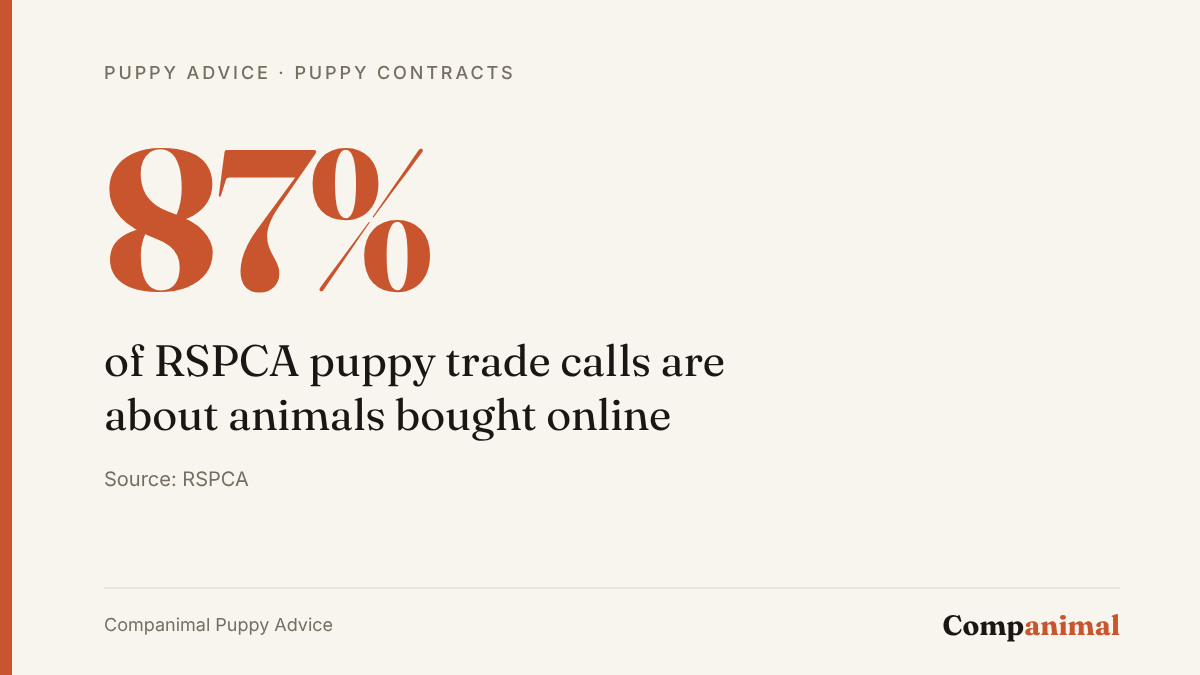
Online adverts need particular care. The RSPCA says 87% of the puppy trade calls it receives are about animals bought over the internet, so read our safety advice for puppy buyers before you pay anything.
Puppy contract templates: which should you use?
If you search for a puppy contract template, you will find many versions. Two UK options are widely used:
| Option | Best for | Notes |
|---|---|---|
| The Puppy Contract (RSPCA and AWF) | Any breeder and buyer, registered or not | Free, includes the puppy information pack and the contract of sale, backed by UK vets and welfare charities |
| Royal Kennel Club contract of sale | Sales of registered puppies | Includes registration and endorsement sections |
Many breeders add their own terms and conditions. These are clauses you may come across:
| Clause | What it usually means |
|---|---|
| Return or first refusal | If you are unable to keep the dog, you contact the breeder first and may offer the puppy back |
| Health check within a set time | The purchaser agrees to a vet check soon after collection, such as within 48 hours or within 7 days of purchase |
| Endorsements | On registered pedigree puppies, an endorsement can mean the dog's progeny cannot be registered, sometimes described as limited registration |
| Neutering | Some breeders ask the buyer to neuter or spay the dog, or not to breed from it |
| Refunds | Whether any refund of the purchase price is offered if a hereditary condition or genetic defect is found, and on what terms |
Read every clause before you sign and ask about anything you do not understand. If a clause seems unusual or one-sided, ask Citizens Advice or a solicitor whether it is enforceable.
After you sign the puppy contract
- Keep your copy of the contract and information pack somewhere safe.
- Book a health check with your own vet within the first couple of days.
- Update the microchip database with your details.
- Contact the breeder promptly if a health problem appears, and keep vet receipts.
Then turn your attention to your new puppy, and plan the first days and nights with our guide to bringing a puppy home.
Frequently asked questions
Is a puppy contract legally binding in the UK?
Citizens Advice describes a puppy contract as legally binding, which is why it gives buyers better protection. Whether a particular clause is enforceable depends on its wording, so take advice if things go wrong.
Is the Puppy Contract free?
Yes. The Puppy Contract from the RSPCA and the Animal Welfare Foundation is free to download for breeders and buyers.
Do I need a contract if I buy from a private breeder?
You should insist on one. When you buy from a private seller, Citizens Advice says you can only get a refund if the puppy did not match the description you were given. A written contract is that description.
What paperwork should come with a puppy?
Expect the information pack and contract, vaccination and vet records, microchip paperwork, worming history, parents' health screening certificates, and registration papers if the puppy is registered.
What if my puppy becomes ill soon after I buy it?
See your vet, keep the receipts and contact the seller straight away. If you bought from a business you may be entitled to a refund or replacement. For any emergency, call a vet immediately.
Can a breeder take the puppy back?
Only on the terms you both signed. Some contracts ask you to contact the breeder, or offer the puppy back, if you can no longer keep the puppy. Read that section carefully before you sign.
Ready to look?
Looking for your next dog?
Browse sellers who show their working. Every listing tells you what has been disclosed, and what has not.
How Companimal shows you what a seller has disclosed
Account in good standing with a phone number confirmed by the seller.
A council licence number disclosed, or KC registration declared on the listing.
A credentialled breeder whose council licence we have checked against the register.
Information on a listing is self-declared by the seller and has not been independently checked. Read our methodology
More from this series
Calm, practical reads from the same hub.
Puppy advice: raising, training and caring for your puppy · 12 min read
How to Sell Puppies in the UK: Safely, Responsibly and to Happy Forever Homes
How to sell puppies in the UK the right way: the law, matching each puppy to the right home, writing an advert serious buyers trust, vetting buyers and a safe handover.
Puppy advice: raising, training and caring for your puppy · 12 min read
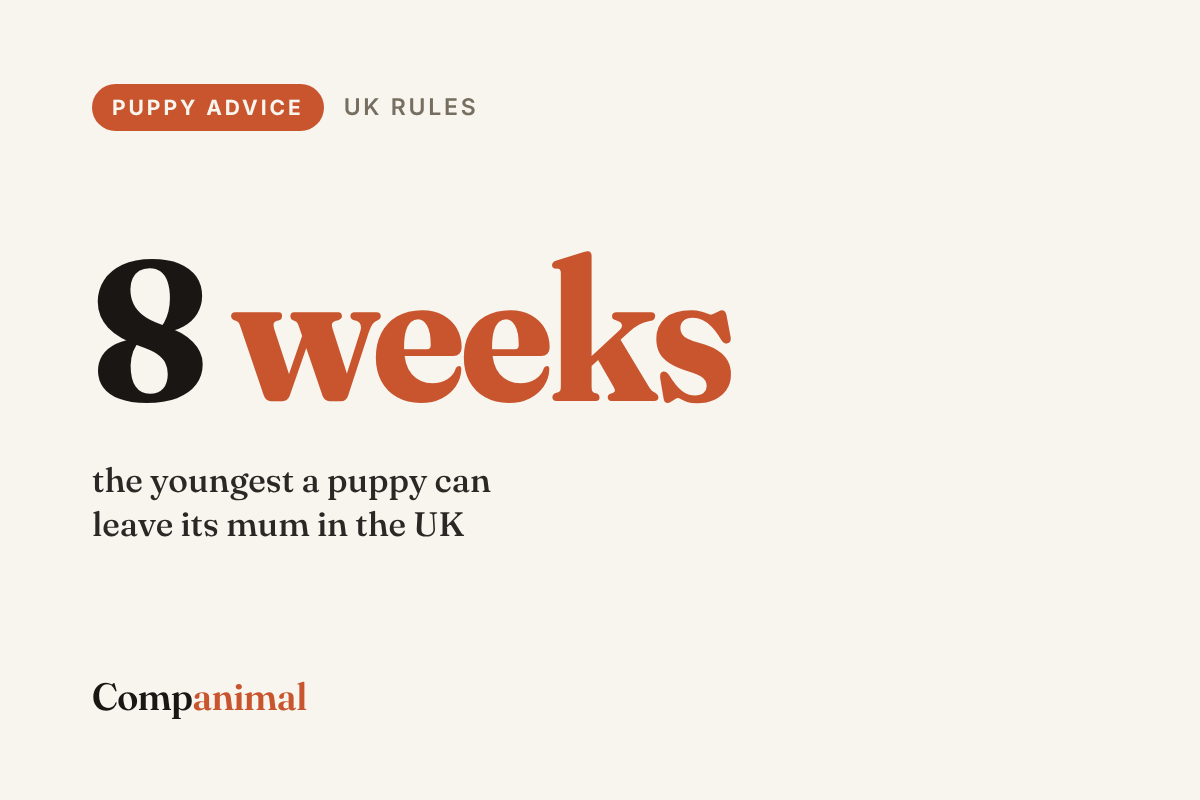
When Can Puppies Leave Their Mum? UK Rules and Why 8 Weeks Matters
Puppies can leave their mum from 8 weeks old in the UK. Here is what the law says in each nation, why those first weeks matter, and what should be done before a puppy goes home.
Puppy advice: raising, training and caring for your puppy · 12 min read
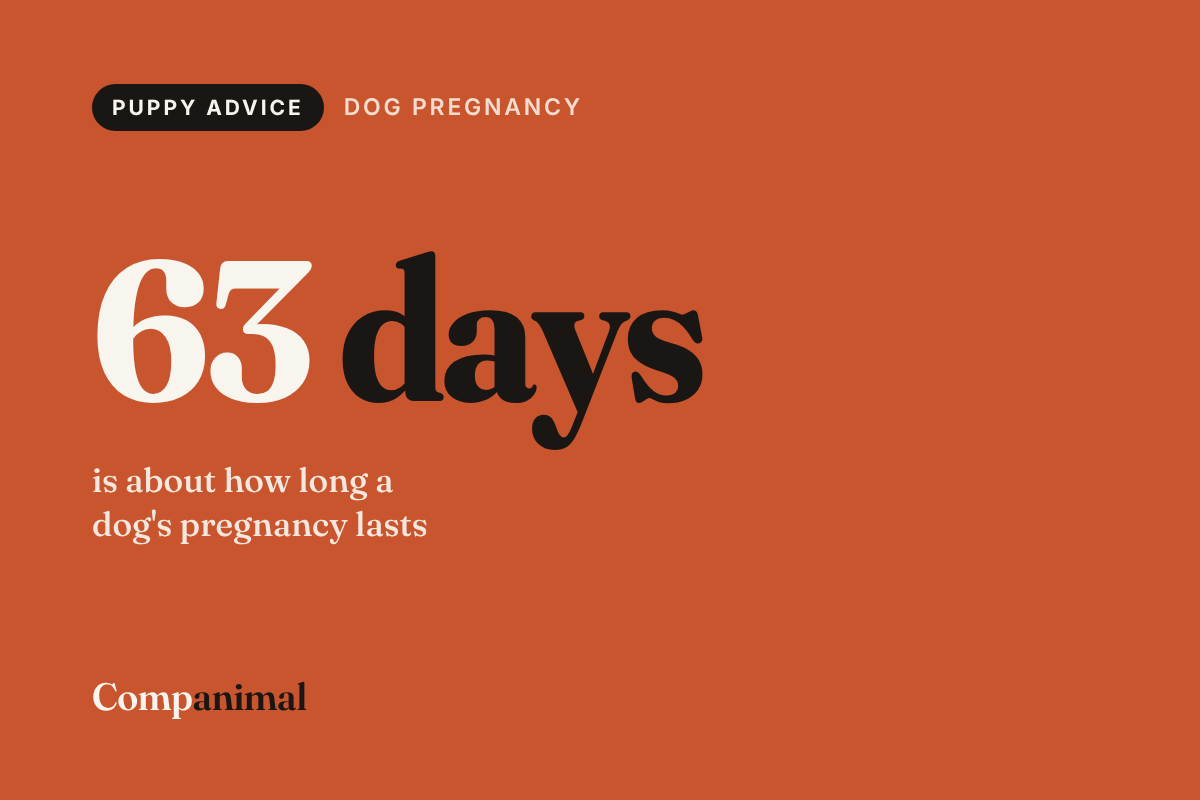
How Long Are Dogs Pregnant? Signs of Pregnancy in Dogs, Week by Week
Dogs are pregnant for about 63 days. How to confirm a pregnancy, the signs week by week, caring for your pregnant dog, whelping and when to call your vet.